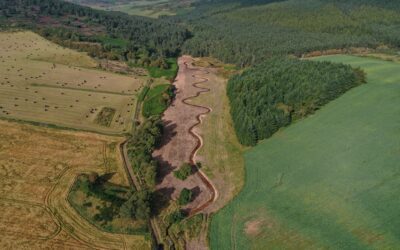
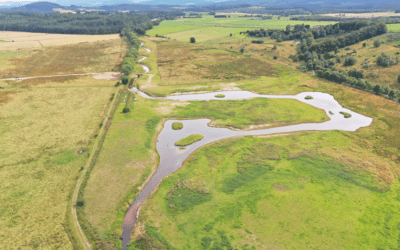
An ambitious initiative in the middle section of the River Dee catchment is nearing completion. The Cattie Restoration Project is located on Ballogie Estate near Aboyne, where a suite of restoration measures were initiated in summer 2023 to help regenerate the Cattie...
Award-winning nature restoration on your doorstep
A blog post by Dr. Lorraine Hawkins, River Director. As we enter the final months as holders of the 2023 Nature of Scotland Award (NOSA) for Nature and Climate Action, I’ve been reflecting on just how significant this win was for the team here at the River Dee Trust...
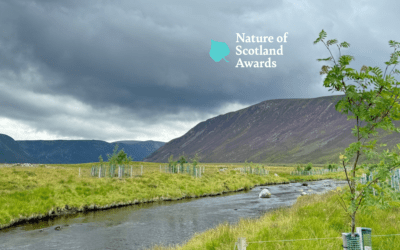
Glen Clunie – River & Floodplain Restoration Project
March 2024 saw the completion of one of our largest scale river and floodplain restoration projects to date, in Glen Clunie. As well as the Clunie Water itself, habitat enhancement actions were carried out along the Baddoch and Callater Burns. Works were made possible...
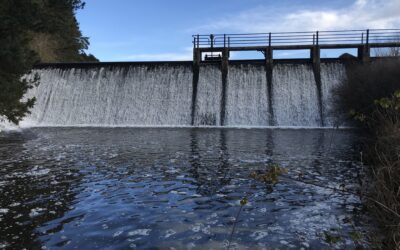
The biggest dam removal in Scotland at Garlogie in Aberdeenshire
After 10 years of background work by the River Dee Trust and the Dee Fishery Board, working with SEPA, Dunecht Estates and Aberdeenshire Council, the green light was finally given to take down the Garlogie Dam in Summer 2023, the team from Taziker Scotland then moved...
Woodland restoration project makes progress with over 100,000 trees planted
The National Trust for Scotland team at Mar Lodge Estate is celebrating the completion of the first phase of an ambitious project to transform and restore habitat in one of Scotland’s most fragile landscapes. The Geldie Woodland Project, an ambitious...
Fish are benefitting from trees in the river
The River Dee Trust’s newly published report shows that the trees being placed in the Dee’s watercourses are having the intended effect of helping fish. Several trees, including their root plates, are anchored into the riverbed and riverbanks to collectively make a...
Breaking down barriers and expanding conservation
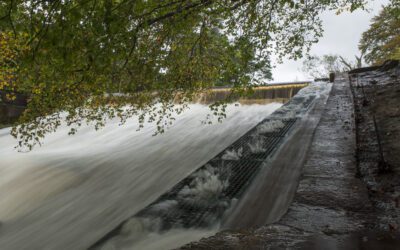
The Culter burn is the second largest tributary of the Dee, its network of 121km of streams enter the Dee at Peterculter. However, for 250 years, nearly all (119km) of the catchment’s streams has been out-of-bounds to migrating salmon and sea trout due to a huge dam,...
An invasive predator under control
During the era of fur farms in the UK, American mink escaped and established in the wild. Many mink were also deliberately released into the wild when the fur trade collapsed and mink farms closed in 1995. This has created havoc for our native wildlife which the mink...
Restoring a catchment
Watch: Channel 4 - Warmer temperatures threatening biodiversity in Scotland: https://www.channel4.com/news/warmer-temperatures-threatening-biodiversity-in-scotland The River Muick is one of the larger upper Dee tributaries, and formerly an important site for Spring...
Reviving a spawning area in the upper Dee
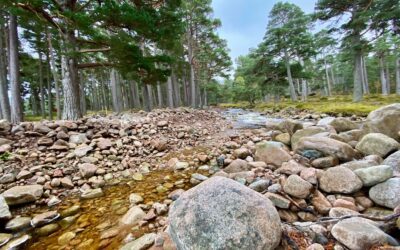
The Garbh Allt is a small tributary in the upper Dee near Ballochbuie. Due to historic works to build up the riverbanks with stones and block side channels with boulders, the river has been constrained, causing good fish spawning areas to decline so much that no fish...
River and wetland restoration on the Beltie burn
Part of the Beltie burn, a significant tributary of the Dee which runs through the village of Torphins, is the site of a large regeneration project completed in 2020 which changed the canalised river into a more natural, meandering river. The aim of the work was to...
Ending exploitation of salmon fisheries on the Dee
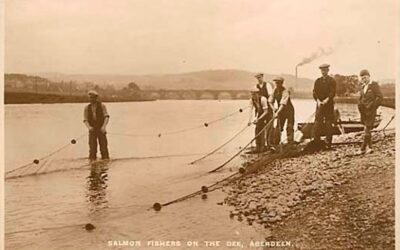
In the 1950s, Dee nets typically caught over 40,000 salmon each year. Anglers on the river took around 10,000 salmon more. However, as fewer salmon began to return from the sea to the river each year after the 1960s, it became...